How Creative Arts Transform Student Engagement in Schools
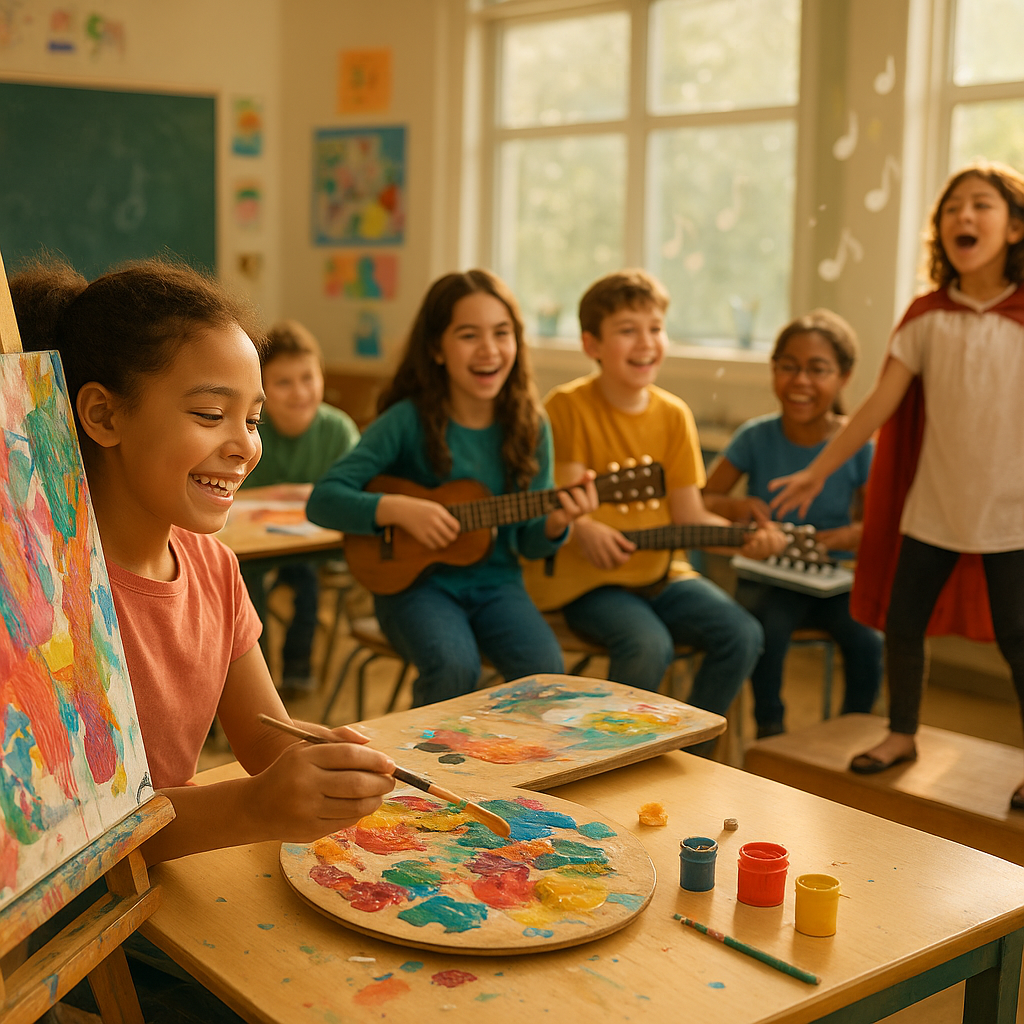
Walk into a school where creative arts are thriving, and you’ll notice something almost immediately — the energy is different. Students are leaning in, talking over each other with excitement, asking questions nobody prompted them to ask. Compare that to a classroom where the day is wall-to-wall standardized test prep, and the contrast is hard to ignore. There’s growing evidence, both anecdotal and scientific, that integrating creative arts into education doesn’t just make school more enjoyable — it fundamentally changes how students connect with learning itself.
This isn’t a new idea, but it’s one that keeps getting pushed to the margins whenever budget cuts arrive. Drama, visual art, music, dance — these subjects are often the first to go and the last to be restored. Yet research consistently points to their outsized impact on student engagement, motivation, and even academic outcomes across other subjects. Understanding why the creative arts have this effect, and how schools can harness it, matters more than ever in an era when student disengagement has reached near-crisis levels.
What Does Student Engagement Actually Mean?
Before diving into how creative arts transform engagement, it’s worth clarifying what “engagement” actually means in an educational context. Researchers typically break it into three distinct dimensions:
- Behavioral engagement: Attendance, participation, completing tasks, following classroom rules
- Emotional engagement: A sense of belonging, enthusiasm for school, positive relationships with teachers and peers
- Cognitive engagement: Deep investment in learning, willingness to tackle challenges, self-regulation, and critical thinking
Most conventional academic interventions target behavioral engagement — getting students to show up and sit still. Creative arts education, when done well, has a remarkable ability to activate all three dimensions simultaneously. A student rehearsing for a school play isn’t just physically present; they’re emotionally invested in the outcome and cognitively challenged by memorization, character interpretation, and ensemble timing.
The Research Behind Arts and Engagement
The connection between creative arts participation and student engagement isn’t just a feel-good assumption — it’s backed by a growing body of rigorous research. A landmark study published through ResearchGate examining the impact of creative arts on student engagement found significant correlations between sustained arts participation and increased motivation, self-efficacy, and academic persistence. Students who engaged regularly with arts programs were more likely to attend school consistently and report feeling connected to their learning community.
Similarly, research published in the RI Journals explored how creative arts environments support both engagement and academic performance. The findings suggested that arts-integrated classrooms tend to produce students who are more willing to take intellectual risks — a key component of deeper learning — compared to those in more traditional instructional settings.
A study from Concordia University’s digital commons looking specifically at choice-based art education found that giving students agency over their creative projects dramatically increased intrinsic motivation. When students could select their own subjects, mediums, and approaches, their time-on-task increased and their resistance to feedback decreased. That’s a significant finding — intrinsic motivation is one of the strongest predictors of long-term academic success.
What the Numbers Tell Us
The statistics around arts education and student outcomes are compelling enough that they’re hard to dismiss:
- Students from low-income backgrounds who have access to arts education are five times more likely to graduate high school than their peers without arts access, according to data from the National Endowment for the Arts.
- Research from The 74 Million found that students in arts-integrated schools showed higher levels of creative thinking, collaboration, and motivation across all subject areas.
- A meta-analysis of arts education studies found that participation in school theater programs specifically was associated with improvements in reading comprehension, oral language skills, and empathy development.
- Students who participate in music programs consistently score higher on spatial reasoning and mathematical problem-solving assessments.
These numbers reflect something educators in arts-rich schools have observed for years: the skills developed through creative practice don’t stay siloed in the art room. They transfer.
Why Creative Arts Reach Students That Traditional Methods Don’t
One of the most important — and underappreciated — aspects of creative arts education is its ability to engage students who are otherwise disengaged from traditional academic structures. Not every student thrives under the pressure of standardized tests, lectures, and textbook exercises. For many learners, these formats feel abstract, irrelevant, or anxiety-inducing.
Creative arts offer a fundamentally different entry point. They’re process-oriented rather than purely outcome-driven. They allow for multiple “right answers.” They value personal expression, which means every student has something valid to contribute. For students who’ve learned to see themselves as academic failures, the arts can provide a crucial experience of competence and recognition that rekindles their relationship with school.
The Role of Emotional Safety in Creative Learning
Research on trauma-informed education has highlighted another dimension of why creative arts matter: they create emotionally safe spaces for learning. Drama therapy, expressive art therapy, and music therapy are well-established clinical practices, but even outside clinical contexts, arts classrooms tend to cultivate a culture of vulnerability and mutual support that many academic environments struggle to foster.
When a student shares a poem they’ve written, or performs in front of their class for the first time, or contributes a painting to a school exhibition, they’re doing something courageous. Teachers who handle these moments thoughtfully — celebrating effort, building constructive critique skills, normalizing imperfection — are teaching social-emotional skills that affect how students engage with every aspect of school life.
Arts Integration: Bringing Creativity Across the Curriculum
One practical approach that many schools are adopting is arts integration — the practice of embedding creative arts methods into core academic subjects rather than treating arts as a separate, peripheral activity. This approach has shown particular promise for improving engagement in traditionally challenging subjects like math, science, and literacy.
Examples of Effective Arts Integration
Here are some concrete ways schools have successfully integrated creative arts into other subjects:
- History through drama: Students research a historical period and perform a scripted or improvised scene from it. This approach deepens understanding of primary sources, builds empathy for historical figures, and makes abstract timelines viscerally real.
- Math through music: Exploring rhythm, time signatures, and scales as mathematical concepts. Students learn fractions through note values in ways that many find more intuitive than abstract fraction problems on a worksheet.
- Science through visual art: Students sketch organisms under microscopes, create illustrated science journals, or design infographics about environmental systems — combining observational skills with scientific understanding.
- Literacy through storytelling and illustration: Having students write and illustrate their own books or graphic novels engages reluctant writers in ways that a blank essay prompt rarely does.
The key to successful arts integration isn’t just adding a creative component as decoration — it’s designing learning experiences where the artistic process and the academic content genuinely inform each other.
The Social Dimension: How Arts Build School Community
Student engagement isn’t just about individual motivation — it’s deeply shaped by a sense of belonging within the school community. This is where creative arts have another often-overlooked advantage: they’re inherently collaborative and public-facing in ways that most classroom activities are not.
A school musical, a student art exhibition, a poetry slam, a film festival — these events create shared experiences that unite students, teachers, families, and the wider community around something meaningful and celebratory. Research published through the International Academic Forum (IAFOR) specifically examined how arts participation weaves social engagement among students, finding that involvement in collaborative creative projects significantly strengthened peer relationships and students’ sense of identity within their school.
For students who feel socially isolated or who belong to marginalized groups, arts programs often serve as inclusive spaces where diverse backgrounds and perspectives are actively valued rather than tolerated. A student whose cultural background isn’t represented in the standard curriculum may find authentic expression — and peer recognition — through creative work in ways that textbooks rarely offer.
Addressing Common Concerns About Arts in Schools
Does Arts Education Take Time Away From Core Subjects?
This is perhaps the most common objection raised when schools consider expanding creative arts programs. The concern is understandable given the very real pressures around standardized testing and academic accountability. But the evidence suggests that arts time, far from competing with academic performance, tends to support it.
Schools that have adopted arts-integrated approaches frequently report improvements in core academic metrics — not just in student satisfaction. When students are more engaged, they’re absent less, they’re more attentive in all their classes, and they’re more likely to persist through difficulty. The question isn’t whether schools can afford to prioritize arts; it’s whether they can afford not to.
How Can Schools With Limited Resources Incorporate More Arts?
Not every school has the budget for dedicated arts teachers or well-equipped studios. But there are meaningful steps that resource-constrained schools can take:
- Partnering with local artists and cultural organizations to bring in expertise and programming at reduced or no cost
- Training existing teachers in arts integration strategies so creative approaches permeate the whole school day
- Applying for arts-specific grants from national foundations and local arts councils, many of which specifically target underserved schools
- Using digital tools — platforms for digital art, music creation, and filmmaking that require minimal physical materials
- Building community partnerships with theaters, museums, and music venues that offer school programs
What Effective Arts Education Looks Like in Practice
Not all arts education produces the transformative results described in the research. Context and quality matter enormously. The most effective creative arts programs share some common characteristics:
- They prioritize process alongside product — students learn to value iteration, experimentation, and learning from failure
- They offer genuine creative agency — students have meaningful choices in what and how they create
- They connect to students’ real lives and identities — the topics, themes, and references feel relevant and personal
- They’re taught by educators who model creative engagement themselves — whether that’s a specialist arts teacher or a classroom teacher who genuinely loves what they’re teaching
- They’re given dedicated time and resources that signal their value within the school culture
When these conditions are met, creative arts aren’t just enrichment — they become transformative educational experiences that shape how students see themselves as learners.
Key Takeaways
The evidence for creative arts as a driver of student engagement is substantial, consistent, and growing. From increasing attendance and reducing dropout rates to fostering deeper cognitive engagement and building stronger school communities, the benefits extend well beyond the art room itself.
Creative arts reach learners who struggle in traditional academic formats, build emotional safety and social connection, and develop transferable skills — critical thinking, collaboration, resilience, and communication — that serve students across every subject and throughout their lives. Arts integration, when thoughtfully designed, enriches core academic learning rather than competing with it.
Understanding these connections is essential for educators, school leaders, and policymakers who are serious about meaningful student engagement — not just compliance and attendance, but the kind of deep, intrinsic investment in learning that creates lifelong learners. The creative arts aren’t a luxury. For many students, they’re the reason school feels worth showing up for.