Developing Fine Motor Skills Through Classroom Craft Activities
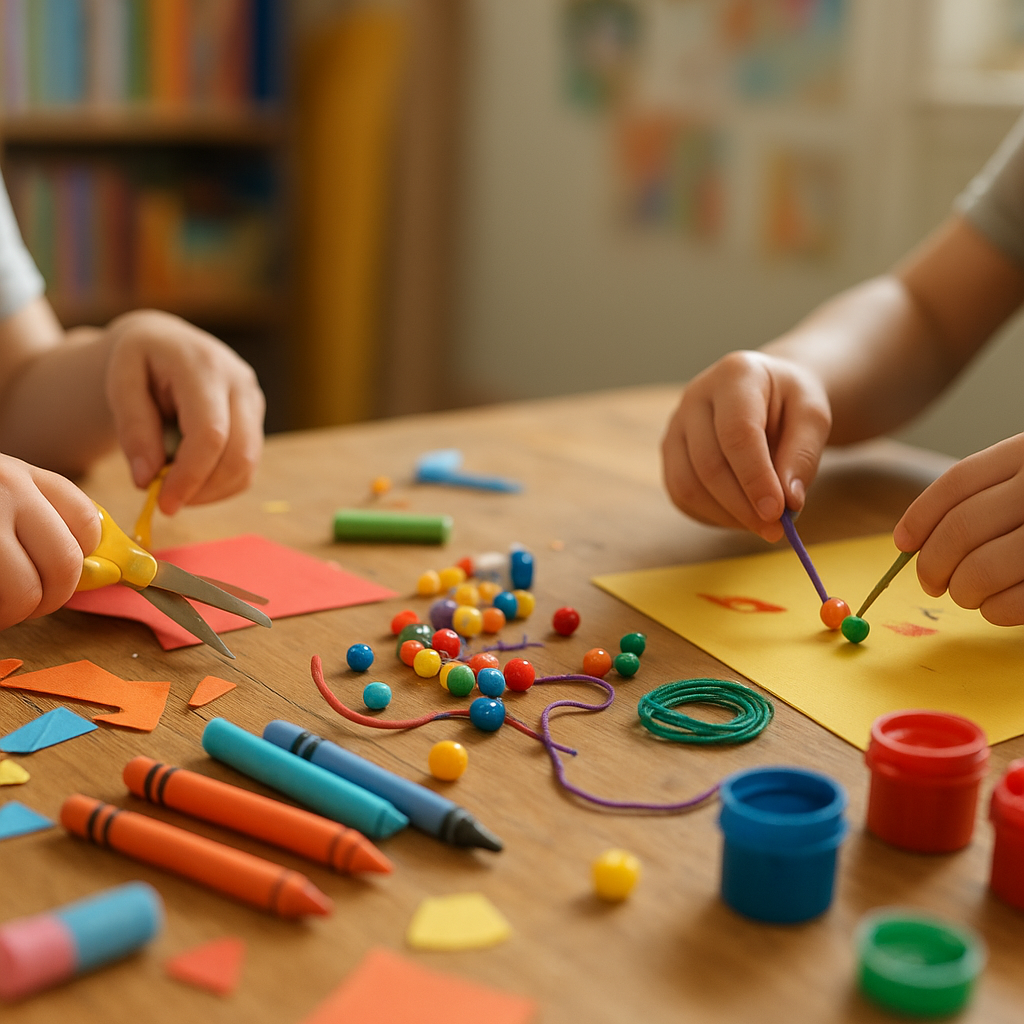
Watch a child carefully cut along a dotted line, thread a bead onto a string, or squeeze glue from a bottle — and you’re watching something genuinely remarkable. These seemingly simple craft tasks are actually complex neurological events, requiring the brain and hand muscles to work in precise coordination. Fine motor skill development is one of the most important aspects of early childhood education, and classroom craft activities are among the most effective — and enjoyable — ways to build these skills.
Fine motor skills refer to the small muscle movements in the hands, fingers, and wrists that allow us to perform tasks requiring precision and coordination. From holding a pencil to buttoning a shirt, these skills underpin a huge range of daily activities. Research published by the American Journal of Occupational Therapy highlights that children with stronger fine motor skills in early childhood tend to show better academic performance, particularly in literacy and math, as they progress through school.
The good news for educators is that developing these skills doesn’t require specialized equipment or complex lesson plans. A well-designed craft session can accomplish remarkable developmental work while keeping students engaged and creative.
Why Craft Activities Are So Effective for Fine Motor Development
One of the reasons craft activities work so well is that they provide purposeful practice. Children aren’t just doing repetitive exercises — they’re working toward a tangible creative outcome, which maintains motivation and encourages them to persist through the challenge. When a child is threading beads to make a necklace, they’re far more likely to keep trying than if they were simply practicing pinching motions in isolation.
Craft activities also tend to involve multiple fine motor skills simultaneously. A single paper-folding project might engage hand strength, bilateral coordination (using both hands together), finger isolation, and precision grip — all at once. This makes crafting an especially rich developmental activity compared to many single-skill exercises.
The Connection Between Hands and Brain
There’s a strong neurological reason why hand-based activities support broader learning. The hand has a disproportionately large representation in the brain’s motor and sensory cortex — a fact that neuroscientists often use to explain why manual activities like crafting, music, and writing can support cognitive development more broadly. When children work with their hands in complex, varied ways, they’re essentially building neural pathways that support attention, problem-solving, and spatial reasoning alongside the physical skills themselves.
What Crafts Help With Fine Motor Skills?
The best craft activities for fine motor development are those that challenge children to use their fingers with precision, control, and coordination. Here are some of the most effective categories:
Cutting and Tearing
Using scissors is one of the most well-known fine motor activities for good reason. It requires coordinated hand movements, the ability to hold paper steadily with one hand while cutting with the other, and sustained attention. Start young children with tearing tissue paper or newspaper before progressing to scissors. As skills develop, move from straight lines to curved lines and eventually complex shapes.
- Beginner: Tearing paper into strips or shapes for collages
- Intermediate: Cutting along straight and gently curved lines
- Advanced: Cutting out detailed shapes, spirals, or silhouettes
Threading and Lacing
Threading beads, pasta, or buttons onto a string is a deceptively challenging task that builds pincer grip strength and hand-eye coordination. Lacing cards — cards with holes punched around the edges that children lace with a shoelace or thick thread — are a staple in early childhood classrooms for exactly this reason. These activities translate directly to real-world skills like tying shoes and fastening buttons.
Painting and Drawing
While painting might seem like a purely creative activity, the way children hold a brush, control paint flow, and make deliberate marks all constitute meaningful fine motor practice. Encourage children to use different tools — thin brushes, cotton swabs, sponge stamps — to vary the challenge and develop more nuanced control. Finger painting, despite its messiness, provides excellent tactile feedback that supports sensory-motor development.
Collage and Gluing
Tearing, placing, and pressing small pieces of material to create a collage requires precise finger manipulation. Squeezing a glue bottle also builds hand strength and control. Using tweezers or craft sticks to position small pieces raises the challenge further and is particularly beneficial for children who are ready for a more demanding task.
Weaving and Playdough
Simple paper weaving on a loom develops bilateral coordination and requires children to use both hands in different roles simultaneously. Playdough and clay work — rolling, pinching, squeezing, and shaping — provide excellent resistance that builds the intrinsic hand muscles needed for writing. A 2019 study from Early Childhood Education Journal found that regular playdough activities measurably improved grip strength in preschool-aged children over a 10-week period.
How Art and Craft Activities Promote Motor Development
The relationship between art, craft, and motor development goes beyond simple hand strengthening. Craft activities promote motor development through several distinct mechanisms:
- Grip development: Holding pencils, brushes, scissors, and craft tools builds the tripod grip essential for writing
- Bilateral coordination: Most craft tasks require both hands working together in complementary roles
- Hand-eye coordination: Cutting along a line, threading a bead, or placing a sticker all require the eyes and hands to work in tandem
- Proprioceptive feedback: Working with textured materials, clay, or fabrics provides rich sensory information that helps children understand where their hands are in space
- Endurance and control: Sustained craft projects build the hand stamina needed for longer writing tasks
It’s also worth noting that craft activities naturally support self-regulation — the ability to pace oneself, tolerate frustration, and persist toward a goal. These executive function skills are deeply intertwined with fine motor development in the early years.
How to Promote Fine Motor Skills in the Classroom
Creating an environment where fine motor development is supported doesn’t require a complete classroom overhaul. Small, consistent changes to how craft time is structured can make a significant difference.
Set Up Purposeful Craft Stations
Rotate a variety of fine motor craft activities through dedicated classroom stations. When children can choose their activity, engagement tends to be higher, and they’ll naturally gravitate toward tasks at their current skill level. Include a mix of challenge levels so every child finds something accessible and something that stretches them.
Choose Tools Thoughtfully
The tools children use matter. Child-sized scissors with rounded tips, chunky crayons for younger children, and gradually thinner writing tools as skills develop all support appropriate muscle development. Similarly, using tweezers, pegs, and hole punches as craft tools adds variety and challenge beyond what standard scissors and pencils offer.
Scaffold the Challenge
Good craft activities should be achievable but not effortless. The developmental sweet spot — sometimes called the zone of proximal development — is where a child can succeed with a reasonable amount of effort. Provide templates and guides for children who are developing skills, and remove scaffolding as confidence grows.
Incorporate Fine Motor Warm-Ups
Before detailed craft work, brief finger exercises can prepare the hands. Simple activities like finger tapping, hand squeezes with a stress ball, or finger puppet play prime the muscles and can improve performance during the main craft activity. Many occupational therapists recommend these warm-up routines as standard practice before any demanding hand-based task.
Document and Celebrate Progress
Keeping examples of children’s craft work over time creates a visual record of fine motor development that can be genuinely revealing. A child’s ability to cut along a line or control a paintbrush at the start of the year compared to the end tells a meaningful developmental story — and sharing this progress with families helps them understand the educational value behind the mess and glitter.
Fine Motor Craft Ideas Across Age Groups
For Toddlers (Ages 2–3)
At this stage, the focus is on exploring materials rather than producing precise outcomes. Finger painting, tearing paper, sticking large stickers, and squishing playdough are all age-appropriate and developmentally rich. Large crayons and chunky chalk are ideal writing tools for this group.
For Preschoolers (Ages 3–5)
Preschoolers can begin working with child-safe scissors, threading large beads, and using glue sticks. Stamping, simple lacing cards, and sponge painting all build control and coordination. This is also a great age to introduce simple weaving with wide strips of paper.
For Early Elementary Students (Ages 5–8)
Children in this group are ready for more detailed work: cutting complex shapes, detailed collage work, simple origami, embroidery on burlap, and increasingly controlled drawing and painting tasks. The challenge at this stage should reflect growing capability while continuing to build the hand strength and control needed for sustained writing. Pairing craft activities with engaging digital tools for elementary students can further reinforce skills and keep motivation high.
For Adults and Older Students
Fine motor skill development doesn’t stop at childhood. Adults recovering from injury, older students managing conditions that affect dexterity, or anyone looking to maintain hand function can benefit from craft-based activities. Knitting, origami, detailed painting, and jewelry making all provide meaningful fine motor challenge for older age groups.
Common Questions About Fine Motor Skill Development
What activities can help develop fine motor skills beyond crafts?
While crafts are excellent, other everyday activities also support fine motor development. Dressing independently (especially fastening buttons and zippers), using cutlery, building with small blocks or LEGO, playing musical instruments, and typing all contribute meaningfully to fine motor skill development. The key is variety and consistent, purposeful practice. Educators looking to strengthen broader learning outcomes may also find it helpful to explore strategies for improving student focus and academic habits alongside fine motor work.
How do I know if a child needs additional support?
Some signs that a child may benefit from additional fine motor support include significant difficulty using scissors by age five, inability to hold a pencil with a functional grip by age six, frequent avoidance of craft or writing activities, and difficulty managing self-care tasks like dressing or using utensils. If these concerns arise, a referral to a qualified occupational therapist is always a worthwhile step.
Bringing It All Together
Classroom craft activities are far more than creative outlets — they are carefully engineered developmental opportunities that build the physical foundation children need for writing, self-care, and academic success. By understanding which activities target which skills, how to scaffold challenge appropriately, and how to set up environments that invite fine motor practice, educators can transform ordinary craft time into genuinely powerful learning.
The evidence is clear: children who engage regularly in varied, purposeful craft activities develop stronger grip, better hand-eye coordination, and more sophisticated bilateral coordination than those who don’t. And perhaps just as importantly, they build persistence, creativity, and confidence along the way.
Whether you’re working with toddlers tearing tissue paper, preschoolers threading beads, or older students tackling origami, the principles remain the same: choose activities that challenge without overwhelming, provide varied tools and materials, celebrate progress, and make it fun. The hands are remarkable learning tools — and giving them rich, purposeful work is one of the best investments any educator can make.